
In industries like construction, mining, oil & gas, and large-scale events such as EV racing and music concerts, companies often rent equipment from local vendors. While renting offers flexibility and allows you to focus on your core business, it can sometimes mean leaving money on the table. What if there was a way to purchase equipment through financing that doesn’t tie up your business lines of credit, reduces capital expenses, and results in monthly payments lower than renting? Financing equipment to own can boost your operational efficiency and financial stability.
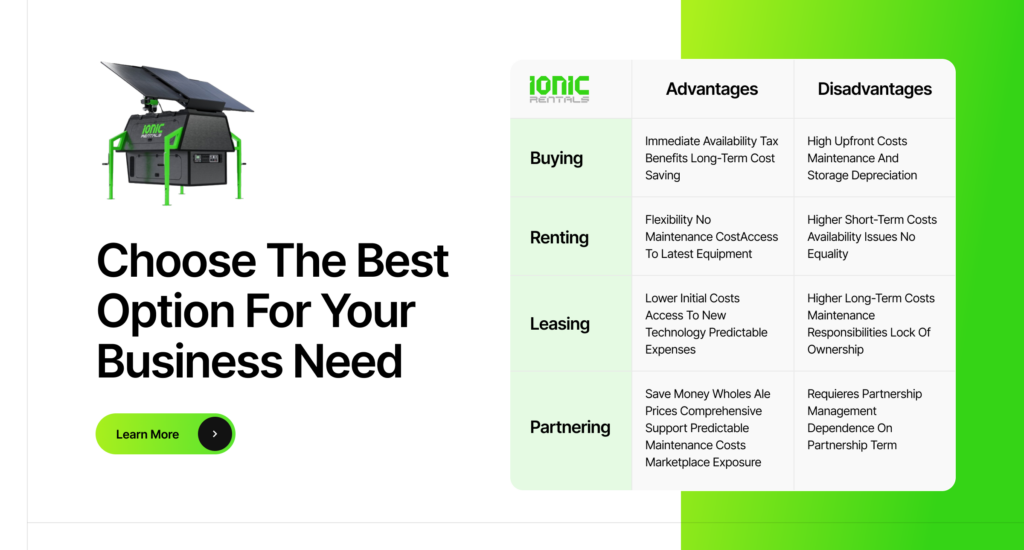
Whether you choose to buy, rent, or finance to own depends on the project’s duration, frequency of equipment use, and available funds. Each option has specific advantages and disadvantages that should be considered.
Buying Heavy Equipment: Pros and Cons
Pros of Buying:
- Customization: Owning equipment allows you to tailor it to your specific needs, enhancing its utility for your tasks.
- Unlimited Use: Ownership means you can operate the equipment without worrying about usage restrictions or time limits.
- Asset Value: Equipment ownership adds value to your balance sheet, enhancing your company’s financial standing.
- Long-Term Cost-Effectiveness: For frequent and long-term use, buying can be more economical than renting or leasing due to better returns on investment.
Cons of Buying:
- High Initial Cost: The upfront purchase price can strain your company’s liquidity, especially if financed with debt.
- Maintenance Responsibilities: Owners must handle maintenance, repairs, and related costs.
- Depreciation: Equipment loses value over time, impacting your investment.
- Technological Obsolescence: Equipment may become outdated but still require payments, affecting operations. Ownership also involves logistical responsibilities for storage and transportation.
Key Considerations When Buying:
- Customer Feedback: Read reviews to understand performance and real-world use.
- Brand Reputation: Research the manufacturer’s reliability and customer satisfaction.
- Resale Value: Evaluate potential depreciation and future resale prospects.
- Financing Options: Explore financing solutions to manage large initial expenses effectively.
- Warranties and Service Contracts: Ensure coverage for maintenance and repairs in case of breakdowns.
These considerations help businesses make informed decisions about heavy machinery investments, balancing operational needs with financial goals.
Renting Heavy Equipment: Pros and Cons
Pros of Renting:
- No Down Payment: Renting requires no significant upfront payments, preserving cash flow.
- Access to Latest Models: Renters can use cutting-edge equipment without ownership costs.
- No Maintenance Costs: Rental companies handle maintenance, easing the client’s workload.
- No Storage Needed: Eliminates storage concerns, saving space and reducing costs.
- Transportation Included: Rental companies often manage transport, ensuring timely setup and removal.
Renting offers flexibility and cost savings for short-term projects or sporadic equipment needs, making it a practical choice for many businesses.
Cons of Renting:
- Higher Long-Term Costs: Renting can be expensive for frequent or extended use compared to owning.
- Availability Issues: Equipment may not always be available when needed.
- No Customization: Rental equipment often lacks customization options for specific projects.
These factors necessitate careful consideration for businesses relying heavily on consistent and tailored equipment solutions.
Financing to Own: A New Solution with Rental 4.0
Benefits of Financing to Own with Ionic Rentals:
- Cost-Effective: Financing can be less risky and more cost-effective than outright purchases, with tailored solutions that reduce financial burdens.
- Preserves Cash Flow: Financing through our Rental 4.0 partnership frees up cash for other business needs, maintaining cash flow for working capital.
- Flexible Payment Schedules: Enjoy customized payment schedules that fit your business model, including monthly, quarterly, and seasonal payments.
- Ownership Benefits: Complete the payment plan, and the equipment is yours, allowing you to claim tax benefits like depreciation and interest expense deductions.
- Equipment Protection: Finance an Equipment Protection Plan (EPP) alongside your machine for comprehensive coverage beyond the standard warranty, protecting against unexpected repair fees.
Through our Rental 4.0 Ionic partnership, you gain access to competitive rates and customizable finance options, making financing to own a viable alternative to renting or buying outright.
The Rental Process with Ionic Rentals: Key Steps and Considerations
- Define Your Equipment Needs: Assess job site conditions, project schedules, equipment sizes, and required attachments to tailor your selection.
- Research and Compare Rental Options: Consider equipment types, brands/models, and rental rates. Use platforms like Ionic Rentals for seamless comparisons of availability and pricing.
- Select a Reputable Rental Company: Choose a company that meets your needs through thorough online research.
- Review Rental Agreements and Policies: Examine agreements for details on insurance, servicing, damages, billing, and termination. Clarify any uncertainties before committing.
- Schedule Delivery and Pickup: Coordinate delivery and pickup with the rental company, ensuring that delivery rates and procedures are clear.
- Inspect Equipment Upon Arrival: Thoroughly check equipment for any damage upon delivery to protect against future claims.
Leasing Heavy Equipment: Pros and Cons
Pros of Leasing:
- Low Initial Costs: Leasing requires minimal upfront cash, freeing funds for other business needs.
- Purchase Option: Many leases offer the option to own the asset at the end of the term.
- Regular Upgrades: Leasing allows access to new technology and models regularly.
- Reduced Maintenance Costs: Leases often cover repairs and maintenance, reducing the lessee’s burden.
Leasing offers flexibility and benefits companies needing equipment for mid-term activities or those avoiding large capital expenses.
Cons of Leasing:
- Usage Restrictions: Leases may impose limits on equipment use.
- Responsibility for Damages: Lessees may be liable for damage during the lease term.
- Potential Storage and Transport Needs: Lessees might have to manage logistics if lease terms change.
Conclusion
Choosing the right solution for your equipment needs is crucial, and Ionic Rentals believes that renting through an Equipment as a Service (EaaS) model is the best choice. Renting provides flexibility and cost savings for short-term ventures, offering access to the latest equipment without ownership burdens.
Whether your project is short or long-term, we provide high-quality equipment that we maintain to ensure efficiency and reliability. Our EaaS service allows you to access equipment tailored to your needs, helping you achieve operational targets seamlessly.
Frequently Asked Questions
- Is renting better for short-term projects?
Yes, renting is ideal for short-term needs due to its flexibility and lower initial costs. - What factors should be considered when buying?
Consider product reviews, brand reputation, resale value, and financing options. - Are there restrictions on leased equipment?
Yes, leases often include usage restrictions and liability for damages. - Why might a company choose to lease rather than buy?
Leasing offers lower upfront costs and flexibility, making it an attractive option compared to purchasing outright.